Table of Contents
For years, skincare culture seemed to follow a simple rule: if something was wrong with your skin, add another product.
Acne? Add an active.
Dark spots? Add an acid.
Texture? Exfoliate.
Signs of ageing? Add retinol.
The result was an increasingly complicated skincare routine, often filled with multiple serums, exfoliants and treatments.
Now, the conversation is shifting.
Barrier-first skincare is becoming mainstream, and the idea behind it is surprisingly simple: before constantly trying to change the appearance of your skin, take care of the skin you already have.
That means paying attention to hydration, gentle cleansing, moisturisation, sun protection and the way your skin responds to active ingredients.
The concept isn’t entirely new. Dermatologists have long considered basic skin care an important part of maintaining healthy skin. The difference is that the skin barrier has moved from a relatively technical dermatology concept into everyday skincare culture.
And that shift says something interesting about where the beauty industry is heading.
What Is the Skin Barrier?
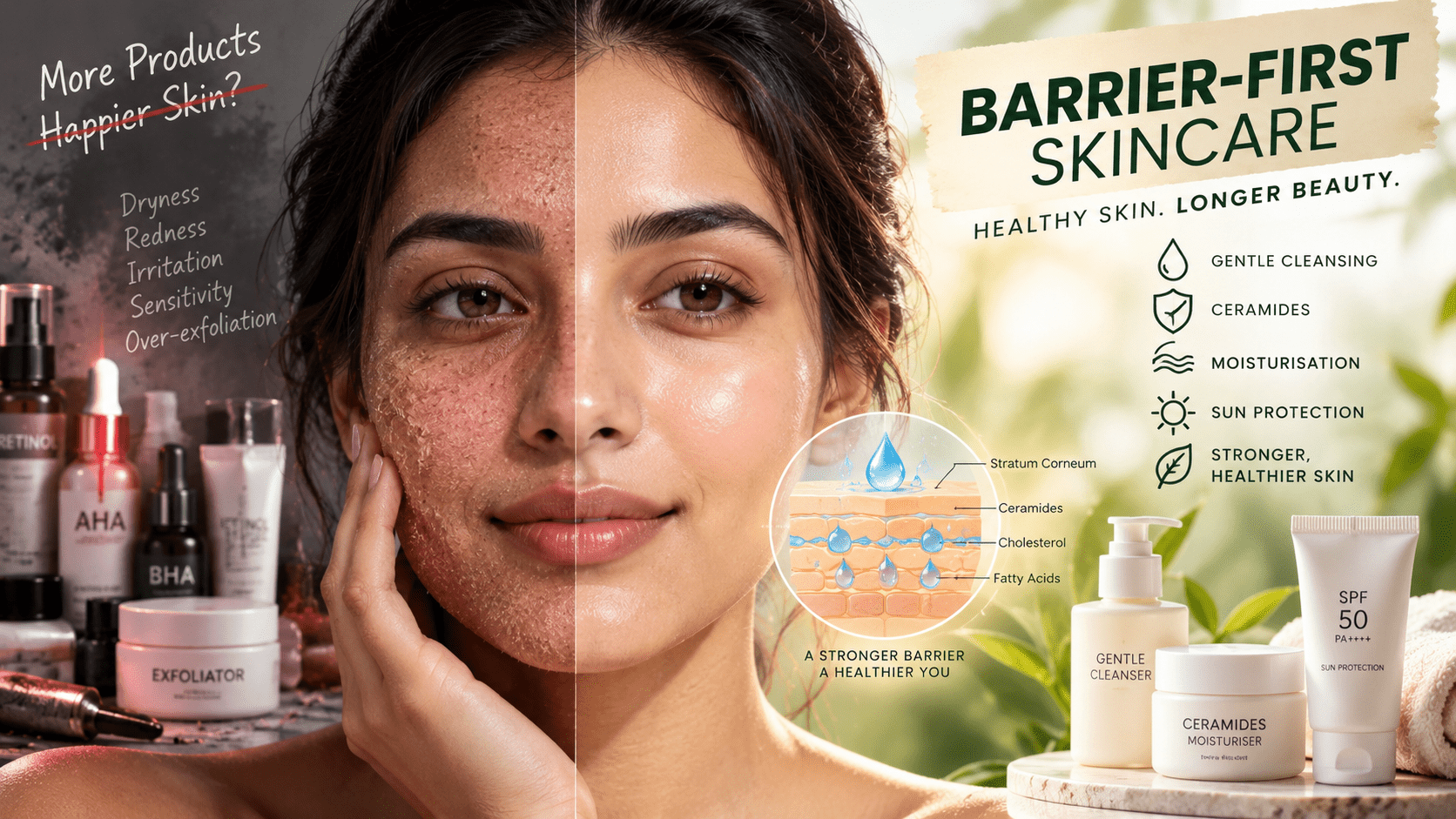
The skin barrier is the outermost protective layer of the skin and forms part of the stratum corneum.
Think of it as the body’s outer defence system.
According to Cleveland Clinic’s explanation of the skin barrier, this outer layer contains tough skin cells and lipids that help protect the living tissue underneath. These lipids include ceramides, cholesterol and fatty acids. The barrier helps keep water inside the skin while helping keep potentially harmful substances and irritants out.
A common scientific analogy is a brick wall.
The skin cells act like the bricks, while the lipids between them work like mortar. When that structure is functioning properly, the barrier can perform its protective role effectively.
When it becomes compromised, however, the skin may become less comfortable.
Dryness, flaking, rough patches, irritation, sensitivity and stinging can occur. Cleveland Clinic lists several of these symptoms among signs that the skin barrier may be damaged.
That does not mean every skin problem is caused by a damaged barrier. Conditions such as acne, eczema, rosacea and psoriasis can have different causes and may require specific medical treatment.
But maintaining the barrier is an important part of everyday skin care.
What Does “Barrier-First” Skincare Actually Mean?
Barrier-first skincare is not a specific product category.
It is better understood as a way of thinking about skincare.
Instead of starting with the strongest treatment available, the approach starts with the foundation: keep the skin clean without unnecessarily stripping it, maintain hydration, protect it from the sun and introduce active ingredients carefully.
A barrier-first routine might therefore focus on:
- Gentle cleansing
- Moisturisation
- Daily sun protection
- Hydration
- Avoiding unnecessary irritation
- Using exfoliants carefully
- Introducing active ingredients gradually
This does not mean that retinoids, salicylic acid or exfoliating acids are bad.
It simply recognises that more treatment is not automatically better treatment.
The American Academy of Dermatology’s everyday skin-care guidance similarly puts the emphasis on basic, consistent skin care and dermatologist-recommended everyday practices.
That basic philosophy is at the heart of the barrier-first movement.
Why Is Barrier-First Skincare Becoming Popular?
The popularity of barrier-first skincare is partly a reaction to the way skincare became increasingly complicated.
The rise—and exhaustion—of complicated routines
There was a time when a long skincare routine was considered a sign that someone was serious about their skin.
Cleanser, toner, essence, serum, second serum, exfoliant, retinol, eye cream, moisturiser and face oil could all find a place on the bathroom shelf.
But eventually, consumers started asking whether every step was actually necessary.
A longer routine also means more opportunities for irritation. Combining several active ingredients can be difficult to manage, particularly for people who do not know how those ingredients interact or how frequently they should be used.
This has contributed to the rise of skinimalism—a broader movement toward simpler skincare routines built around fewer, more purposeful products.
The appeal is obvious.
Instead of constantly searching for the next product, people can focus on getting the basics right.
Over-exfoliation became a problem
Exfoliation can be useful when used appropriately. But the growing obsession with perfectly smooth skin encouraged some people to exfoliate too frequently.
Scrubs, acids, peels and retinoids can all affect the skin in different ways. When several potentially irritating treatments are used together or too often, the result may be discomfort rather than improvement.
Cleveland Clinic specifically identifies harsh chemicals or soaps, over-exfoliating, excessive scrubbing and not using moisturiser as factors that can damage the skin barrier.
That has helped shift the conversation from:
“How much can my skin tolerate?”
to:
“How little irritation can I create while still getting the result I want?”
That is a significant change in skincare culture.
Ceramides Became a Mainstream Ingredient
The growing focus on the skin barrier has also changed the popularity of certain ingredients.
Perhaps none is more closely associated with barrier care than ceramides.
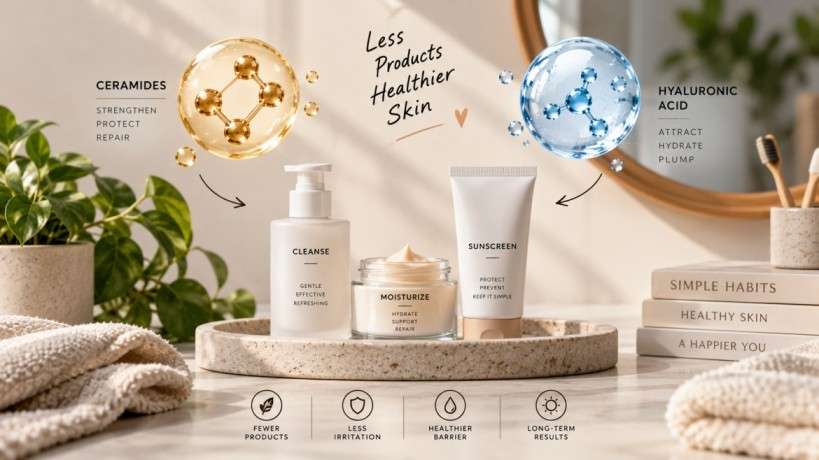
Ceramides are naturally occurring lipids found in the skin and form an important part of the barrier’s structure. They are now common in moisturisers and other products marketed toward dry, sensitive or barrier-focused skincare.
Cleveland Clinic notes that ceramides, cholesterol and fatty acids are among the lipids involved in the skin barrier and are also used in skincare formulations.
But this does not mean everyone needs a separate ceramide serum.
That would simply replace one skincare obsession with another.
A moisturiser that already contains barrier-supporting ingredients may be enough for many people.
The bigger development is conceptual: consumers are becoming more interested in supporting the skin’s natural functions rather than constantly trying to override them.
Does Barrier-First Skincare Mean Giving Up Retinol and Acids?
No.
This is perhaps the biggest misconception surrounding the trend.
Barrier-first skincare is not anti-active.
Retinoids, exfoliating acids and acne treatments can all have legitimate uses. The issue is how they are incorporated into a routine.
A strong active ingredient may be useful for one person and irritating for another. Even the same person may tolerate an ingredient differently depending on how often it is used and what other products are being applied.
The barrier-first approach therefore encourages people to think about tolerance and balance.
If your skin is already dry, irritated or stinging, adding another strong treatment may not be the logical next move.
Cleveland Clinic recommends a gentler approach when caring for a compromised barrier, including mild cleansing, moisturisation and avoiding practices that unnecessarily strip the skin.
The principle is simple:
Treat your skin without constantly fighting it.
What Does a Barrier-First Routine Look Like?
A barrier-first routine does not need to be complicated.
Morning
1. Gentle cleansing
Depending on your skin type and routine, use a gentle cleanser rather than aggressively stripping away natural oils.
2. Moisturiser
Apply a moisturiser that provides enough hydration for your skin and feels comfortable throughout the day.
3. Sunscreen
Sun protection is an essential part of everyday skin care. Cleveland Clinic describes sunscreen as one of the most important ways to protect the skin.
The American Academy of Dermatology also provides broader guidance on everyday skin care and dermatologist-recommended habits through its skin care basics resource.
Evening
1. Cleanse
Remove sunscreen, makeup, sweat and daily buildup without excessive scrubbing.
2. Treatment, if needed
If you use an active ingredient, use it according to appropriate product directions and your skin’s tolerance.
3. Moisturise
Finish with a moisturiser to support hydration and the skin barrier.
For many people, that is enough.
The routine does not have to contain eight or ten products to be effective.
What Can Damage the Skin Barrier?
One of the most useful things about the barrier-first approach is that it asks people to consider what they may be doing wrong, rather than simply looking for another product.
Potential contributors to barrier damage include:
- Harsh soaps or cleansers
- Excessive exfoliation
- Aggressive scrubbing
- Over-cleansing
- Very hot water
- Failing to moisturise
- Excessive use of irritating products
Cleveland Clinic recommends using warm rather than very hot water, choosing mild soap-free cleansers and avoiding over-cleansing or aggressive exfoliation when caring for the skin barrier.
This is where the idea of “barrier-first” becomes practical.
Sometimes improving your skincare routine means removing a step, not adding one.
What Are the Signs of a Compromised Skin Barrier?
A damaged or compromised barrier can show up in several ways.
Common signs can include:
- Dry or flaky skin
- Rough patches
- Redness
- Irritation
- Itching
- Increased sensitivity
- Tenderness
- Stinging when skincare products are applied
These symptoms are not a diagnosis by themselves. Different skin conditions can produce similar symptoms.
If irritation is persistent or severe, particularly if you suspect an underlying skin condition, professional medical advice is more appropriate than trying to solve the problem through skincare trends.
Why Barrier-First Skincare Fits the Current Beauty Market
The popularity of barrier-first skincare also reflects a wider change in consumer behaviour.
People are becoming more ingredient-conscious.
Instead of simply buying products based on packaging or celebrity endorsements, consumers increasingly search for individual ingredients such as ceramides, hyaluronic acid, glycerin, niacinamide and retinol.
At the same time, people are becoming more aware that skincare advice on TikTok, Instagram and YouTube can be inconsistent.
A routine that works for one influencer may not work for everyone.
That makes a simpler, evidence-informed approach more attractive.
The American Academy of Dermatology’s everyday skincare resources are a good example of this more foundational approach: start with basic skin care and choose practices and products appropriate for your skin rather than assuming that complexity is necessary.
Is Barrier-First Skincare Just Another Trend?
The phrase itself is definitely a trend.
Beauty companies have recognised that “barrier repair,” “skin resilience,” “ceramides” and “sensitive skin” resonate with today’s consumers.
But the underlying idea is not new.
Gentle cleansing, moisturisation and sun protection have been part of dermatological skincare advice for years.
What has changed is the language consumers use to understand those habits.
The skin barrier has become a mainstream concept.
And that may give barrier-first skincare more staying power than many short-lived beauty trends.
The Shift From “More” to “Better”
Perhaps the most interesting part of the barrier-first movement is the change in mindset.
Skincare culture spent years teaching people to look for problems and immediately reach for a treatment.
Barrier-first skincare asks a different question:
Is my routine helping my skin—or constantly stressing it?
That does not mean ignoring acne, pigmentation, ageing or other genuine concerns.
It means building a stable foundation before aggressively pursuing those goals.
A person may still use retinoids. Another may use an exfoliating acid. Someone else may need prescription treatment from a dermatologist.
The difference is that those treatments are no longer automatically treated as the foundation of skincare.
The foundation comes first.
What Could Be Next for Barrier-First Skincare?
The barrier-first movement is likely to remain influential because it connects with several broader changes in beauty: simpler routines, ingredient awareness, preventive skincare and growing interest in dermatology-backed information.
The next stage may be less about finding a miracle product and more about understanding how products work together.
That is arguably a more sustainable direction for the industry.
Instead of asking which product is strongest, consumers may increasingly ask which routine is effective, tolerable and sustainable enough to follow consistently.
And that is a much more useful question.
Frequently Asked Questions About Barrier-First Skincare
What is barrier-first skincare?
Barrier-first skincare is an approach that prioritises maintaining the skin’s protective barrier through gentle cleansing, moisturisation, hydration, sun protection and careful use of active ingredients.
Why is barrier-first skincare becoming mainstream?
It is becoming popular partly because consumers are moving away from complicated routines and excessive exfoliation. There is also greater awareness of the importance of maintaining the skin barrier.
What damages the skin barrier?
Harsh soaps or chemicals, over-exfoliation, aggressive scrubbing, excessive cleansing and inadequate moisturisation can contribute to barrier problems.
Are ceramides good for the skin barrier?
Ceramides are naturally occurring lipids that form an important part of the skin barrier. They are commonly included in moisturisers designed to support the skin barrier.
Does barrier-first skincare mean avoiding retinol?
No. Retinol and other active ingredients can still be used when appropriate. Barrier-first skincare simply emphasises using active ingredients carefully and paying attention to skin tolerance.
How can I support my skin barrier?
A practical starting point is gentle cleansing, regular moisturisation and daily sunscreen. Avoid excessive scrubbing and unnecessary irritation. The American Academy of Dermatology’s everyday skincare guidance provides additional dermatologist-informed information.
How do I know if my skin barrier is compromised?
Dryness, flaking, roughness, irritation, sensitivity and stinging can occur when the barrier is compromised. However, these symptoms can have other causes as well.
Is a 10-step skincare routine necessary?
No. A long skincare routine is not automatically better. A simpler routine that suits your skin and that you can consistently follow may be more practical.
The Bigger Picture
Barrier-first skincare may sound like another beauty buzzword, but underneath the marketing is a simple idea:
Healthy skin needs support, not constant intervention.
The movement does not mean that active ingredients are bad or that everyone should suddenly abandon their existing skincare routine.
It means putting the basics back where they belong.
Cleanse gently. Moisturise. Protect your skin from the sun. Be careful with strong treatments. And pay attention when your skin starts telling you that something is not working.
After years of skincare culture pushing more products, more steps and stronger actives, the next major shift may be toward something much simpler.
Not doing more to the skin.
Taking better care of it.