Table of Contents
Walk into a clothing store and you will quickly notice three familiar promises: breathable, soft, lightweight and comfortable. Linen, cotton and viscose can all deliver those qualities, but they do it in very different ways.
That is why the linen vs cotton vs viscose debate is more useful when you look beyond the label. One fabric may be better for hot weather, another for everyday durability, and another for a soft, flowing outfit.
The short answer? There is no universal winner. The right choice depends on what you are wearing, how often you will wash it, how much you care about structure or softness, and what kind of environmental trade-offs you are willing to accept.
What Are Linen, Cotton and Viscose?
Before comparing them, it helps to understand where each fabric comes from.
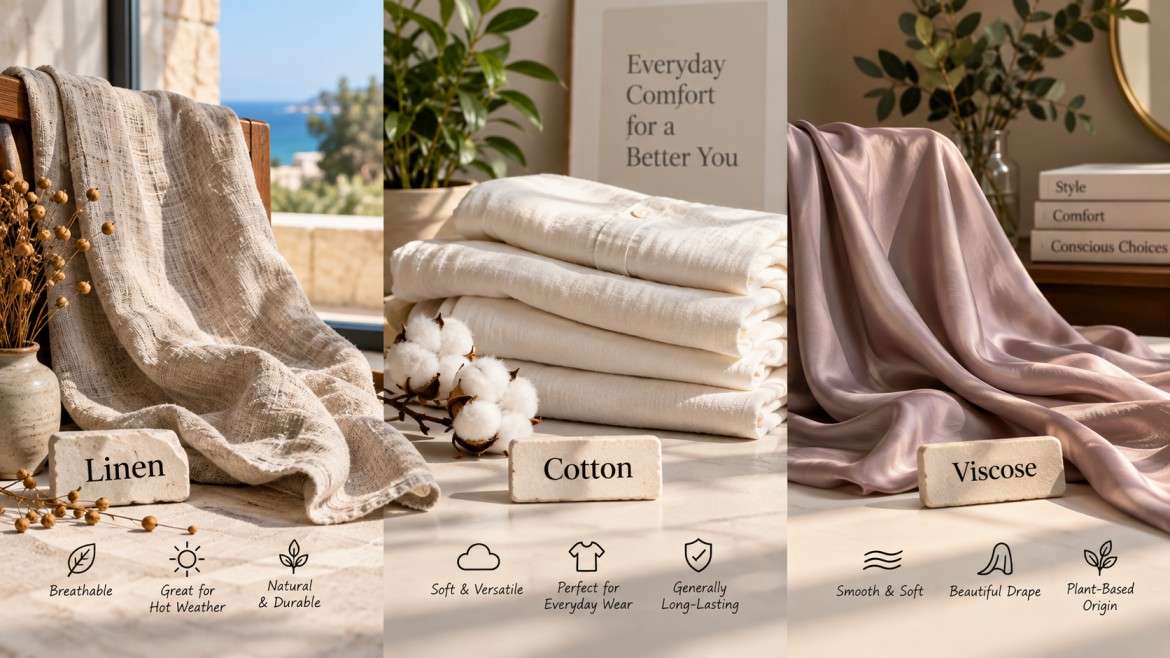
Linen is a natural plant fibre made from the flax plant. Its fibres are relatively strong and are known for a crisp hand feel, airflow and a distinctive tendency to wrinkle.
Cotton is also a natural plant fibre, produced from the cotton plant. It is widely used because it is soft, versatile and relatively easy to care for. Different cotton constructions can feel completely different, from lightweight voile to heavy denim.
Viscose is different. It starts with cellulose, commonly sourced from wood pulp, but the cellulose is chemically processed and regenerated into fibre. Textile Exchange describes viscose as a smooth, absorbent, strong and breathable man-made cellulosic fibre.
That means viscose is neither a conventional natural fibre like cotton nor a petroleum-based synthetic such as polyester.
Linen vs Cotton vs Viscose: The Biggest Differences
The easiest way to understand the linen vs cotton vs viscose comparison is to look at comfort, durability, appearance, maintenance and environmental considerations.
| Feature | Linen | Cotton | Viscose |
|---|---|---|---|
| Origin | Flax plant | Cotton plant | Regenerated cellulose, often wood pulp |
| Feel | Crisp, airy, textured | Soft to sturdy | Smooth, soft, flowing |
| Breathability | Excellent | Very good | Very good |
| Moisture absorption | Good | Good to very good | High |
| Wrinkling | High | Moderate | Usually lower |
| Durability | High | Generally high | Often more delicate |
| Drape | Relaxed, structured | Depends on weave | Excellent |
| Best for | Hot weather, relaxed tailoring | Everyday clothing | Dresses, blouses, fluid garments |
These are broad tendencies, not guarantees. The final performance depends heavily on yarn, weave, weight, finishing and garment construction.
1. Linen: Best for Airflow and a Relaxed Look
Linen is often the first fabric people think of for hot weather, and there is a good reason for that. Its structure allows air to move through the fabric, while its moisture absorption helps make warm-weather clothing feel comfortable.
Its biggest visual advantage is also its most recognizable feature: wrinkles. Linen develops a relaxed, lived-in appearance rather than maintaining a perfectly smooth surface.
That makes it excellent for:
- Summer shirts
- Loose trousers
- Resort wear
- Dresses
- Lightweight blazers
- Bedsheets and home textiles
Linen can also be durable. With good care, a quality linen garment can last for years. However, it may feel slightly rougher or more structured than cotton or viscose when new.
The trade-off is maintenance. If you want a shirt to look freshly pressed all day, linen may frustrate you. If you like natural texture and an effortless appearance, the same characteristic becomes an advantage.
In the linen vs cotton vs viscose comparison, linen is particularly attractive when your first priority is airflow rather than softness.
2. Cotton: The Most Versatile Everyday Choice
Cotton is difficult to beat for versatility. It can be lightweight and cool, thick and durable, soft and luxurious, or rugged enough for workwear.
A major advantage of cotton is the sheer range of fabrics made from it. A T-shirt, Oxford shirt, denim jacket and bedsheet can all be cotton while behaving completely differently.
Cotton works particularly well for:
- T-shirts
- Shirts
- Jeans
- Casual trousers
- Underwear
- Towels
- Bedding
Its main weakness is that performance varies significantly. Some cotton garments absorb moisture without drying quickly, while others are engineered or blended to improve moisture management.
Cotton also deserves a more nuanced sustainability discussion. Water use, farming methods, location and production practices all matter. Textile Exchange’s 2026 cotton life-cycle assessment evaluates different cotton production systems across multiple countries rather than treating all cotton as environmentally identical.
For readers interested in the underlying research, the Textile Exchange Cotton Life Cycle Assessment (LCA) study provides a useful reference.
So, in the linen vs cotton vs viscose debate, cotton is often the safest all-round option when you want versatility and familiar care requirements.
3. Viscose: Best for Softness and Fluid Drape
Viscose is often chosen when a garment needs to feel soft and fall elegantly around the body.
Because the fibre is regenerated from cellulose, manufacturers can create fibres with characteristics that make them suitable for smooth, lightweight fabrics. Viscose is absorbent and breathable, and it generally has a more fluid drape than traditional linen or many cotton fabrics.
That makes it popular for:
- Dresses
- Blouses
- Skirts
- Scarves
- Lightweight trousers
- Soft home textiles
The downside is that viscose can be more sensitive to washing and mechanical stress than sturdy cotton or linen. Depending on the construction, wet handling can affect strength and shape.
There is also an important sustainability caveat. Viscose comes from renewable cellulose, but its production involves chemical processing, and the environmental performance depends on where the wood comes from and how chemicals and waste are managed.
Textile Exchange notes risks involving deforestation, biodiversity and chemical pollution in conventional viscose supply chains. Its viscose material overview explains these issues alongside the fibre’s advantages.
This is an important part of the linen vs cotton vs viscose discussion because “plant-based” does not automatically mean environmentally harmless.
Which Fabric Is Best for Hot Weather?
If your priority is staying comfortable in heat, linen is usually the strongest choice.
Its airy construction and moisture-handling characteristics make it particularly suited to hot, humid conditions. Lightweight cotton is a close second, especially when you want something easier to wear and maintain.
Viscose can also feel cool and breathable, particularly in loose garments, but its softness and drape are usually bigger selling points than rugged summer durability.
So, for hot weather:
Linen → best for maximum airflow and a relaxed summer feel
Cotton → best for everyday versatility
Viscose → best for soft, flowing garments
For people living in warm climates, the linen vs cotton vs viscose decision will often come down to whether they value maximum airflow, easy everyday wear or softer drape.
Which One Is the Most Durable?
Linen and cotton generally have the advantage when long-term everyday wear is the priority.
Linen fibres are naturally strong, while cotton can be extremely durable depending on fibre quality, yarn and fabric construction. Viscose can still make excellent clothing, but delicate viscose garments may need gentler washing and handling.
This is where linen vs cotton vs viscose becomes more practical: don’t judge durability from the fibre name alone. A heavy, tightly woven cotton may outlast a lightweight linen garment, while a well-made viscose blend may outperform a poorly constructed cotton fabric.
Always check the garment’s weight, weave, stitching and care label.
Which Fabric Looks the Most Premium?
This depends on the aesthetic you want.
Linen has a natural, understated luxury. Its texture and wrinkles can make an outfit look intentionally relaxed.
Cotton can look almost anything you want because it is available in so many constructions. A crisp cotton shirt can look formal, while a jersey T-shirt feels casual.
Viscose tends to create a smooth, elegant appearance. Its fluid drape can make dresses and blouses look more polished without feeling stiff.
For relaxed luxury, choose linen. For classic versatility, choose cotton. For soft elegance, choose viscose.
In other words, the linen vs cotton vs viscose choice can also be a style decision rather than simply a technical one.
What About Sustainability?
This is where simple “best fabric” rankings can become misleading.
A fibre’s environmental impact depends on farming or forestry, water use, chemicals, energy, manufacturing, transport, garment lifespan and end-of-life treatment. Even within the same fibre category, production methods can produce very different results.
Recent research reinforces that point. A 2026 comparative life-cycle assessment of T-shirts found meaningful differences between fibre types and showed that production location and processing can substantially change environmental outcomes.
The practical lesson is more useful than declaring one fibre universally sustainable: buy fewer garments, choose quality, use them for longer, and look for credible sourcing information.
A durable garment that is worn many times can be a better practical choice than a supposedly “eco-friendly” garment that is rarely worn.
So, when considering the sustainability side of linen vs cotton vs viscose, look at the entire production system rather than assuming that one fibre is automatically the greenest.
Linen vs Cotton vs Viscose: Which Should You Buy?
Use this simple rule:
Choose linen if: you live in a hot climate, want maximum airflow, and like a naturally textured look.
Choose cotton if: you want an everyday fabric that can handle many different uses and care routines.
Choose viscose if: softness, breathability and elegant drape matter more than rugged durability.
You can also combine them. Linen-cotton blends, for example, can balance linen’s airflow with cotton’s familiar softness. Viscose blends can add softness and movement to fabrics that would otherwise feel more structured.
The best linen vs cotton vs viscose choice is therefore the one that matches how you actually plan to use the garment.
The Bottom Line
The linen vs cotton vs viscose question does not have a single winner because each fibre solves a different clothing problem.
Linen stands out for hot weather, airflow and natural texture. Cotton remains the all-rounder, offering enormous versatility across casual and durable clothing. Viscose excels when you want softness, absorbency and a smooth, flowing drape.
Instead of asking which fabric is “best,” ask a better question: best for what?
For a summer vacation, linen may be your smartest choice. For a daily T-shirt, cotton is hard to beat. For a soft dress that moves with the body, viscose may be the better option.
And when sustainability matters, look beyond the fibre name. The way a material is grown, processed, sourced and ultimately used can matter just as much as the label on the garment.

FAQs
Is linen better than cotton in summer?
Usually, yes, especially for very hot weather. Linen is highly breathable and has an airy feel. Lightweight cotton can also perform very well and may be easier to maintain.
Is viscose better than cotton?
Not universally. Viscose is often softer and has better drape, while cotton is generally more versatile and can be more durable depending on the fabric.
Does linen last longer than viscose?
Linen is generally the stronger choice for long-term durability, while viscose often benefits from gentler washing and handling.
Is viscose a natural fabric?
Viscose begins with natural cellulose, usually from wood pulp, but it is chemically processed and regenerated into fibre. It is therefore classified as a man-made cellulosic fibre rather than a conventional natural fibre.
Which is the most sustainable: linen, cotton or viscose?
There is no universal answer. Environmental performance depends on farming or forestry practices, water use, processing chemistry, energy, sourcing and product lifespan. Certifications and supply-chain transparency can be more useful than relying on the fibre name alone.
Click here To See This Type Of Article.