Table of Contents
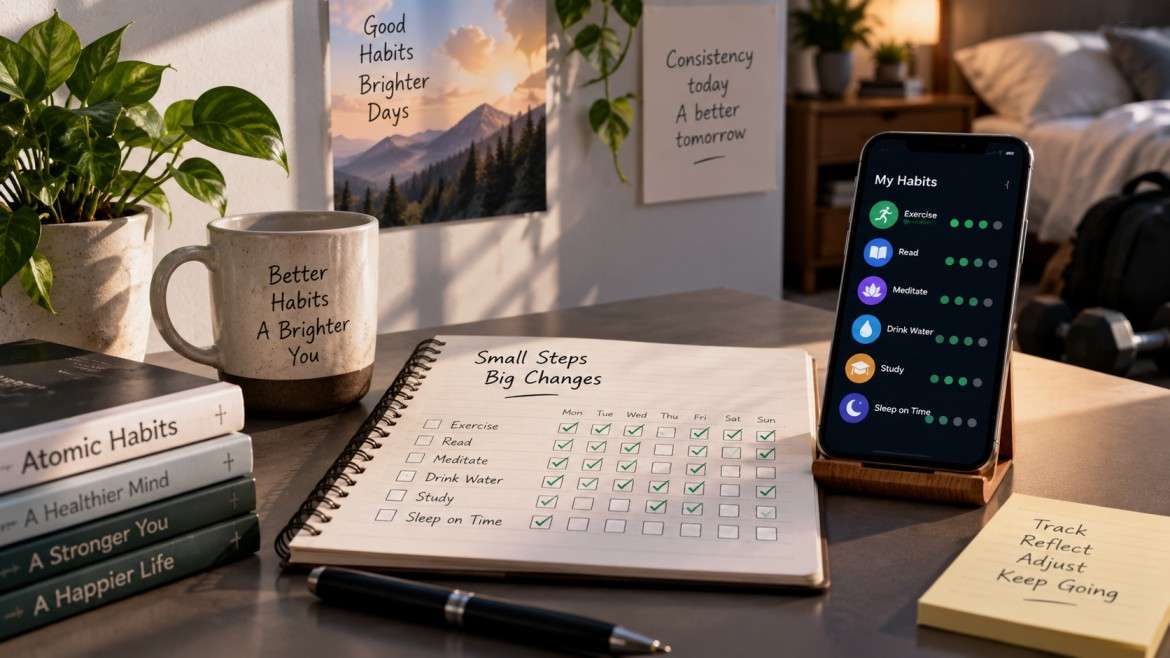
You download a habit-tracking app. You create a list: exercise, read, meditate, drink water, study, sleep on time.
For the first week, you are perfect.
Then you miss Tuesday.
The next day, you miss again.
By the end of the month, the app is still on your phone—but you have stopped opening it.
This raises an interesting question: does habit tracking work, or does it simply make us feel productive while we are tracking instead of actually changing?
The research suggests a more useful answer.
Habit tracking can be effective because it makes behavior visible, encourages self-monitoring, and provides feedback about progress. But tracking is not the habit itself. The behavior still needs repetition, a useful cue, realistic goals, and an environment that makes the behavior easier to perform.
So the real question isn’t simply does habit tracking work?
It is when, why, and for whom does it work?
What Is Habit Tracking?
Habit tracking is the process of recording whether you performed a behavior.
It can be as simple as putting an X on a calendar or as sophisticated as using an app that automatically records exercise, sleep, meditation, or other activities.
The basic process is:
Choose a behavior → perform it → record it → review your progress → adjust
This process is closely related to self-monitoring, a widely used behavior-change technique.
A major meta-analysis published in Psychological Bulletin examined 138 studies involving nearly 20,000 participants and found that interventions encouraging people to monitor their goal progress improved both monitoring and goal attainment. The researchers found stronger effects when progress was physically recorded or made visible. You can read the full meta-analysis on goal-progress monitoring.
That provides an important clue about does habit tracking work: recording progress can be useful because it changes how people interact with their goals.
The Psychology of Habit Tracking
The psychology of habit tracking is less about the checkbox itself and more about what the checkbox does to your attention.
Without tracking, you might think:
“I think I’ve been exercising pretty regularly.”
With tracking, you can see:
Monday ✓
Tuesday ✓
Wednesday ✗
Thursday ✓
Friday ✓
The behavior becomes concrete.
This is one reason the psychology of habit tracking is connected to self-awareness. Tracking can reveal patterns that are otherwise easy to ignore.
For example, you may discover that you rarely exercise on days when you work late. Instead of concluding that you have “no discipline,” you can redesign the habit around your schedule.
The psychology of habit tracking therefore isn’t simply about motivation. It is about feedback.
And that distinction matters when asking does habit tracking work.
Why Does Tracking Help?
One of the biggest benefits of a habit tracker is visibility.
Your brain can easily forget what happened several days ago. A tracker creates a record.
That record can provide:
- Awareness
- Feedback
- Accountability
- Progress information
- A sense of completion
- An opportunity to identify patterns
Another important benefit of a habit tracker is that it can turn a vague goal into a specific behavior.
Compare:
“I want to read more.”
with:
“Read 10 pages after dinner.”
The second goal is easier to track because you know exactly what counts.
Research on digital behavior-change interventions supports the importance of self-monitoring, goal-setting, prompts, and cues in habit formation. A 2024 systematic review of 41 studies found self-monitoring, goal setting, and prompts among the most commonly used behavior-change techniques. You can explore the systematic review on digital habit-formation interventions.
Does Habit Tracking Work for Everyone?
No.
The evidence does not support the idea that opening an app and checking a box automatically creates a habit.
The question does habit tracking work depends partly on what you are tracking and how you use the information.
For example, tracking “exercise” once per day may be useful.
But tracking 15 different habits every morning, afternoon, and evening can become another task you have to maintain.
Eventually, the tracker itself becomes exhausting.
This is where the pros and cons of habit tracking become important.
Pros and Cons of Habit Tracking
The pros and cons of habit tracking depend heavily on the person and the design of the system.
Pros
The main benefits of a habit tracker include:
- Making behavior visible
- Creating accountability
- Showing progress
- Identifying patterns
- Encouraging consistency
- Providing immediate feedback
- Helping you notice missed days
Tracking can also create a small psychological reward when you complete a behavior and mark it as done.
The pros and cons of habit tracking become particularly favorable when tracking takes only a few seconds.
Cons
The pros and cons of habit tracking also include several drawbacks.
Tracking can become:
- Tedious
- Obsessive
- Overly focused on streaks
- Discouraging after a missed day
- More complicated than the habit itself
Research on self-monitoring has found both benefits and drawbacks. A study involving 1,768 participants found that tracking could increase awareness and reflection, but some people also experienced it as tedious or unpleasant. The researchers discuss these strengths and weaknesses of self-monitoring in this PubMed study.
So the pros and cons of habit tracking should be considered before choosing an elaborate tracking system.
Why Habit Trackers Fail
If tracking is potentially useful, why do so many people abandon their trackers?
There are several explanations for why habit trackers fail.
1. The habit is too ambitious
“Go to the gym for one hour every day” is difficult to maintain.
“Walk for 10 minutes after lunch” may be much easier.
2. There are too many habits
Trying to transform your entire life simultaneously creates unnecessary cognitive load.
3. The tracker becomes the goal
This is one of the biggest problems with why habit trackers fail.
You can become obsessed with maintaining a perfect streak instead of building a useful behavior.
Missing one day then feels like failure.
4. There is no cue
If you simply write “meditate” on your tracker without deciding when or where you will do it, you still have to remember to initiate the behavior.
5. The behavior is poorly designed
If your habit requires 30 minutes of preparation, expensive equipment, and a complicated routine, a checkbox won’t solve the underlying problem.
These are some of the main reasons why habit trackers fail despite the popularity of habit-tracking apps.
Streaks: Helpful or Harmful?
Streaks are one of the most popular features of habit trackers.
You exercise five days in a row.
Your app shows:
🔥 5-day streak
That can be motivating.
But streaks can also create an all-or-nothing mindset.
If you miss day six, you may think:
“I’ve ruined the streak, so I might as well stop.”
A better approach is to focus on consistency over perfection.
Instead of asking:
“Did I maintain my streak?”
ask:
“How often did I perform this behavior this month?”
This shift can make the benefits of a habit tracker more useful while reducing the psychological pressure of perfection.
How to Track Habits Effectively
If you want to know how to track habits effectively, start by making the tracking system almost effortless.
A good system should take seconds, not minutes.
1. Track one or two habits first
Don’t start with 12 behaviors.
Choose the habits that matter most.
2. Make the behavior measurable
Instead of:
“Study more.”
Try:
“Study for 25 minutes after breakfast.”
3. Attach the habit to a cue
This is a key principle in how to track habits effectively.
For example:
After brushing my teeth → meditate for five minutes.
The existing behavior becomes the trigger for the new one.
4. Track completion, not perfection
Your goal is not a perfect calendar.
Your goal is repeated behavior.
5. Review your data
Tracking without reviewing is like collecting financial data without looking at your bank account.
Ask:
- When do I usually succeed?
- When do I miss?
- What makes the habit easier?
- What repeatedly gets in the way?
This is where the psychology of habit tracking becomes practically useful.
Can Tracking Actually Make a Behavior Automatic?
Tracking itself does not necessarily make a behavior automatic.
Repetition in a stable context is much more important.
A 2020 study of 186 participants examined habit formation using behavior monitoring and cues. Participants increased habit strength and behavior during the intervention, while intention, behavior, and habit strength were important predictors of maintenance.
This suggests that the benefits of a habit tracker are likely to come from supporting the process rather than replacing it.
The tracker reminds you.
You perform the behavior.
You repeat it.
The behavior gradually becomes easier to initiate in the same context.
That’s the actual habit-building process.
Why Context Matters More Than the Tracker
Imagine you want to drink more water.
You could create a tracker that says:
Drink water ✓
But when should you drink it?
A more useful system might be:
After I sit down at my desk → drink a glass of water.
Now there is a cue.
Habits are strongly connected to repeated behavior in stable contexts. Research on habit formation shows that context-specific measurement can be more sensitive to changes in habit and behavior than context-free measurement.
This is one of the most important lessons for how to track habits effectively.
Don’t just track what you do.
Pay attention to when, where, and after what cue you do it.
Habit Tracking vs Motivation
Another misconception is that tracking replaces motivation.
It doesn’t.
Motivation can help you begin a behavior, but a well-designed habit gradually reduces the amount of conscious effort needed.
The psychology of habit tracking becomes more powerful when the tracker supports a behavior that is already easy to repeat.
For example:
Motivation: “I should exercise.”
Habit system: “After work, I change into workout clothes and walk for 15 minutes.”
The tracker records the behavior.
The environment and cue help initiate it.
Repetition strengthens the routine.
This is why the psychology of habit tracking should be understood alongside the broader psychology of habit formation.
What Should You Track?
Not everything deserves a tracker.
Good candidates include behaviors that:
- Are clearly defined
- Happen regularly
- Matter to a specific goal
- Can be measured simply
- Have a clear completion point
Examples:
| Goal | Better habit to track |
|---|---|
| Read more | Read 10 pages |
| Exercise | Walk 20 minutes |
| Learn a language | Practice 15 minutes |
| Sleep earlier | Lights out by 11 PM |
| Study | Complete one focused session |
| Drink more water | Drink a specific number of glasses |
This makes the benefits of a habit tracker much easier to realize.
When Habit Tracking Becomes Counterproductive
The pros and cons of habit tracking become less favorable when tracking creates anxiety.
If missing a day makes you feel guilty, or you spend more time maintaining the tracker than doing the behavior, simplify the system.
Some people also become overly focused on numbers.
For example, someone may walk 9,800 steps and feel unsuccessful because they did not reach 10,000.
But the difference may be meaningless for their actual goal.
This is another reason why habit trackers fail: the measurement becomes more important than the behavior.
The tracker should serve your goal—not become your goal.
A Simple Habit-Tracking System That Actually Makes Sense
If you’re wondering how to track habits effectively, try this four-step system:
Step 1: Choose one behavior.
Pick something small enough to repeat.
Step 2: Choose a cue.
Connect it to something you already do.
Step 3: Track completion.
Use a simple checkbox, calendar, notebook, or app.
Step 4: Review once a week.
Look for patterns rather than judging yourself.
For example:
Goal: Read regularly.
Cue: After dinner.
Minimum behavior: Five pages.
Tracker: One checkbox.
Weekly review: How many days did I read, and what prevented me from reading on the others?
This system captures the benefits of a habit tracker without allowing the tracker to become another complicated project.
So, Does Habit Tracking Work?
After looking at the evidence, the answer to does habit tracking work is:
Yes, it can—but it is not magic.
Tracking works best as a support system for behavior change.
It can increase awareness, make progress visible, encourage self-monitoring, and help you identify patterns. Research on goal monitoring also suggests that regularly recording progress can improve goal attainment.
But does habit tracking work equally well for everyone?
No.
Its effectiveness depends on the behavior, the person, the tracking method, and what happens after the data is recorded.
The most useful tracker isn’t necessarily the most sophisticated app.
Sometimes it is simply a calendar on your wall.
The Bottom Line
So, does habit tracking work?
It can—when tracking supports the behavior instead of becoming the behavior.
The strongest benefits of a habit tracker come from making progress visible, creating feedback, and helping you notice what makes a behavior easier or harder.
The psychology of habit tracking explains why this can be useful: monitoring brings behavior into awareness and gives you information you can act on.
But the pros and cons of habit tracking should be considered. Tracking can motivate you, but it can also become tedious or create an unhealthy obsession with streaks.
If you’re trying to understand why habit trackers fail, the answer is often that the underlying habit is too difficult, the system is too complicated, or the tracker has become the goal.
The best approach to how to track habits effectively is surprisingly simple:
Make the behavior small. Attach it to a clear cue. Track it quickly. Review your progress. Adjust when necessary.
A habit tracker cannot build the habit for you.
But used correctly, it can make the process of building one much easier to see—and much easier to improve.
FAQs
Does habit tracking work for building habits?
Does habit tracking work for everyone? No. But research suggests that self-monitoring and progress tracking can support behavior change, especially when combined with clear goals and repeated behavior.
What is the psychology of habit tracking?
The psychology of habit tracking involves self-monitoring, feedback, awareness, goal progress, and reinforcement. Tracking makes behavior more visible and can help people identify patterns.
What are the benefits of a habit tracker?
The main benefits of a habit tracker include increased awareness, visible progress, accountability, feedback, and easier identification of patterns that affect consistency.
What are the pros and cons of habit tracking?
The pros and cons of habit tracking depend on how it is used. It can improve awareness and accountability, but it can also become tedious, stressful, or overly focused on streaks.
Why do habit trackers fail?
Why habit trackers fail often comes down to unrealistic goals, too many tracked behaviors, complicated systems, lack of clear cues, or becoming more focused on the tracking process than the behavior itself.
How can I track habits effectively?
To understand how to track habits effectively, choose a specific behavior, connect it to an existing cue, record completion quickly, and review your results periodically.
Do habit-tracking apps actually work?
Apps can help, but the app itself is not what creates the habit. The value comes from self-monitoring, reminders, feedback, and supporting repeated behavior.
Should I track every habit?
No. Tracking one or two meaningful behaviors is often more sustainable than trying to monitor everything you do.
Are habit streaks scientifically proven to build habits?
A streak can provide motivation and visible feedback, but maintaining a streak is not the same as developing an automatic habit. Repetition in a stable context is more fundamental to habit formation.
What should I do if I miss a day?
Continue the next day. One missed day does not erase previous repetitions. The goal should be long-term consistency rather than a perfect streak.
To Explore More Topics Like That, Click Here